



Owning a pharmacy in the United States is more than running a healthcare business. It is a long-term investment that requires strategic planning, regulatory knowledge, financial management, and continuous improvement. From launching an independent pharmacy to expanding its services and eventually selling the business, every stage plays an important role in determining long-term success.
The pharmacy industry continues to evolve with changing healthcare regulations, insurance reimbursement policies, patient expectations, and market competition. Pharmacy owners must understand these changes to maintain profitability, deliver quality patient care, and protect their business investments.
Whether you are planning to open your first pharmacy, managing an established location, or preparing to sell your business, understanding the pharmacy ownership lifecycle can help you make smarter decisions at every stage.

Understanding the Pharmacy Ownership Lifecycle
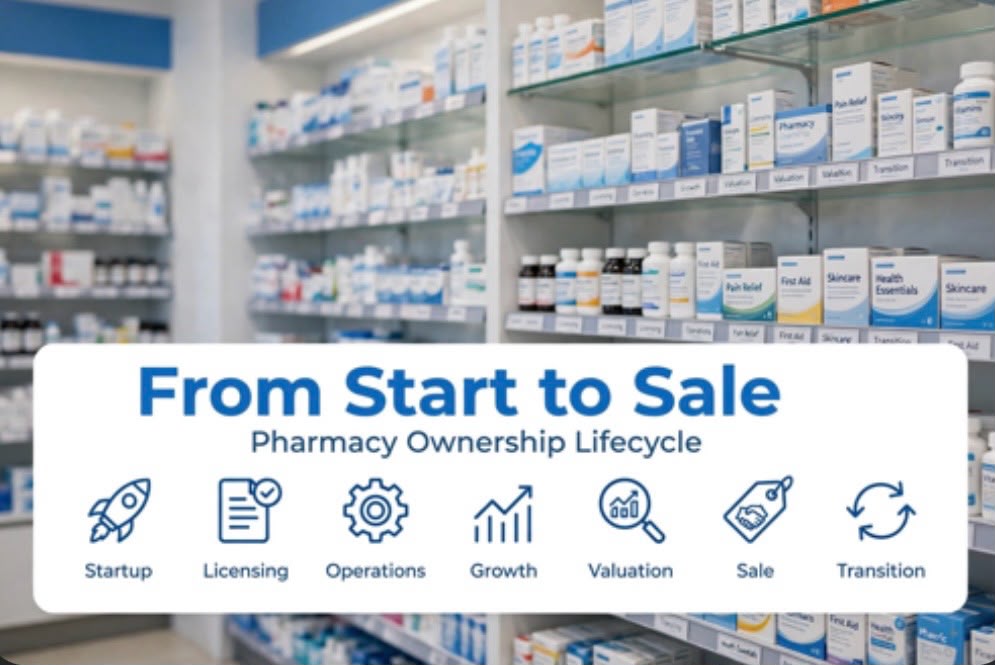
The pharmacy ownership lifecycle covers every major phase of a pharmacy business, beginning with the initial idea and ending with a successful sale or ownership transition.
The major stages include:
- Pharmacy startup and business planning
- Licensing, registration, and compliance
- Daily operations and patient management
- Business development and expansion
- Financial planning and business valuation
- Sale preparation and buyer negotiations
- Ownership transfer and business transition
Understanding these stages helps pharmacy owners prepare for immediate responsibilities and future opportunities.
1. Pharmacy Startup: Turning Your Business Idea Into Reality
Starting a pharmacy is an important investment that requires careful preparation. Before opening, owners must evaluate the local healthcare market, determine startup costs, select a suitable location, and establish a realistic business model.
Researching the Pharmacy Market
Market research helps determine whether a particular location offers sufficient demand and business potential.
Consider the following factors:
- Population size and local healthcare requirements
- Nearby hospitals, clinics, and physician offices
- Existing independent and chain pharmacies
- Local competition and prescription demand
- Commercial rent and operating expenses
- Opportunities for specialized pharmacy services
Choosing a location based on actual market demand can improve the chances of building a sustainable business.
Developing a Pharmacy Business Plan
A professional business plan provides direction for startup operations and future growth.
Important planning areas include:
- Initial investment and working capital
- Medication inventory and supplier relationships
- Pharmacy management software
- Employee recruitment and payroll
- Insurance and reimbursement planning
- Marketing and patient acquisition
- Long-term financial objectives
A detailed plan can also help owners communicate their business goals to lenders and potential investors.
2. Licensing, Registration, and Pharmacy Compliance
Regulatory compliance is a fundamental part of operating a pharmacy in the United States. Requirements vary by state, pharmacy type, ownership structure, and services offered.
Obtaining Required Pharmacy Licenses
Before opening, pharmacy owners generally need to obtain the appropriate state pharmacy permit. The business must also meet applicable requirements concerning its pharmacist-in-charge and professional staffing.
Depending on the pharmacy’s activities, additional registrations may include:
- State Board of Pharmacy permits
- DEA registration for applicable controlled-substance activities
- State controlled-substance registrations, where required
- Applicable Medicare and Medicaid enrollment
- Payer and pharmacy benefit manager (PBM) network participation
Owners should verify requirements with relevant state and federal authorities before beginning regulated activities.
Maintaining Ongoing Regulatory Compliance
Obtaining a license is only the beginning. Pharmacy owners must maintain compliance throughout business operations.
Key responsibilities may involve:
- HIPAA privacy and security requirements
- Controlled-substance storage and recordkeeping
- Prescription documentation and dispensing procedures
- Applicable FDA requirements
- State pharmacy inspection standards
- Employee training and professional credentials
Regular internal reviews and updated policies can help identify compliance gaps before they become serious problems.
3. Managing Pharmacy Operations and Patient Care
After opening, the focus shifts toward building efficient operations and maintaining reliable patient services. Effective management helps control costs, improve productivity, and establish long-term customer relationships.
Improving Inventory and Purchasing Management
Medication inventory represents a significant financial commitment for many pharmacies. Poor inventory control can lead to expired products, unnecessary purchasing costs, and cash flow problems.
Pharmacy owners should:
- Monitor medication stock levels regularly.
- Track expiration dates and product returns.
- Review purchasing patterns and supplier pricing.
- Maintain appropriate storage conditions.
- Identify slow-moving and high-demand products.
- Use inventory management software where appropriate.
A structured purchasing process helps reduce waste while maintaining medication availability.
Recruiting and Retaining Qualified Employees
A pharmacy depends on a qualified team to deliver safe and efficient services.
Effective staff management includes:
- Clear job responsibilities
- Regular professional training
- Consistent communication
- Appropriate scheduling
- Performance evaluations
- A supportive workplace environment
A well-trained team can improve workflow efficiency and patient satisfaction.
Building Strong Patient Relationships
Patient trust is an important factor in pharmacy success. Customers are more likely to return when they receive reliable service and professional support.
Pharmacies can improve patient experience through:
- Convenient prescription refill options
- Timely prescription processing
- Clear medication instructions
- Responsive customer service
- Medication synchronization programs
- Appropriate follow-up communication
Consistent service quality can strengthen community relationships and support customer retention.
4. Growing Your Pharmacy Business Through Strategic Expansion
Once daily operations become stable, pharmacy owners can explore opportunities to increase revenue, improve efficiency, and reach new patient groups.
However, expansion should be based on financial performance and market demand rather than growth alone.
Introducing Additional Pharmacy Services
Expanding services can help independent pharmacies differentiate themselves from larger competitors.
Depending on state laws, professional qualifications, and applicable approvals, potential services include:
- Immunization and vaccination services
- Medication therapy management (MTM)
- Specialty medication services
- Prescription delivery
- Medication synchronization
- Long-term care pharmacy services
- Compliance packaging
Before introducing a new service, owners should evaluate its costs, staffing needs, training requirements, and potential demand.
Improving Pharmacy Marketing and Online Visibility
Digital marketing helps pharmacies connect with local patients and build brand recognition.
An effective pharmacy marketing strategy may include:
- Creating a professional business website
- Optimizing the Google Business Profile
- Publishing useful healthcare-related content
- Maintaining accurate online business listings
- Encouraging genuine customer feedback
- Improving local search engine optimization (SEO)
Consistent online visibility can help potential customers discover pharmacy services when searching locally.
Expanding Into Additional Locations
Opening another pharmacy can increase market reach and create additional revenue opportunities.
Before expanding, evaluate:
- Financial resources and working capital
- Local competition and patient demand
- Licensing and ownership requirements
- Staffing and management capacity
- Inventory and supplier coordination
- Technology and operational systems
Owners should strengthen their existing location before investing in additional branches.
5. Financial Management and Pharmacy Business Valuation
Financial management is essential from the first day of ownership until the eventual sale. Owners who regularly review their financial performance are better positioned to identify problems, improve profitability, and prepare for future opportunities.
Monitoring Pharmacy Financial Performance
Pharmacy owners should regularly evaluate important financial indicators, including:
- Annual revenue and gross profit
- Prescription volume and sales trends
- Medication purchasing expenses
- Payroll and operating costs
- Accounts receivable
- Cash flow and outstanding liabilities
- Insurance reimbursement performance
Accurate bookkeeping and organized financial statements make it easier to understand the actual financial condition of the business.
Understanding Pharmacy Business Valuation
Pharmacy business valuation estimates what a pharmacy may be worth in the current market. It is particularly important for owners considering retirement, partnership changes, or selling their business.
Buyers may evaluate several factors:
- Annual revenue and profitability
- Prescription volume and customer retention
- Business location and competition
- Inventory and equipment
- Lease agreements
- Payer and supplier contracts
- Compliance and operational history
Common valuation approaches include earnings-based, asset-based, and market-comparison methods.
Working with an experienced pharmacy broker, accountant, or valuation professional can help owners understand their business’s financial position and potential market value.
6. Preparing Your Pharmacy for a Successful Sale
Selling a pharmacy is a significant business decision. Proper preparation can help owners attract qualified buyers, organize negotiations, and avoid unnecessary delays.
Organizing Financial and Business Documents
Before listing the pharmacy, owners should prepare essential records for buyer evaluation and due diligence.
These may include:
- Recent financial statements and tax returns
- Profit and loss statements
- Inventory and purchasing records
- Pharmacy licenses and permits
- Lease and rental agreements
- Supplier and payer contracts
- Employee and payroll information
- Compliance and operational documentation
Organized documentation helps buyers understand the business and evaluate potential risks.
Finding the Right Pharmacy Buyer
Potential buyers may include independent pharmacists, existing pharmacy owners, healthcare entrepreneurs, and investment groups.
A suitable buyer should have the financial resources, relevant experience, and ability to meet applicable regulatory requirements.
An experienced pharmacy broker can assist with:
- Identifying potential buyers
- Preparing marketing materials
- Screening interested parties
- Coordinating business discussions
- Managing negotiations
- Supporting the transaction process
Negotiating the Pharmacy Sale Agreement
The purchase agreement should clearly explain the terms and responsibilities of both parties.
Important considerations include:
- Final purchase price
- Assets included in the transaction
- Inventory valuation
- Outstanding liabilities
- Lease arrangements
- Employee-related obligations
- Closing conditions
- Required regulatory approvals
Both buyers and sellers should obtain appropriate legal, tax, and financial advice before signing the final agreement.
7. Completing the Pharmacy Ownership Transition
The final stage of the pharmacy ownership lifecycle involves transferring business responsibilities and preparing the new owner to operate successfully.
Managing Licensing and Contract Requirements
A pharmacy sale does not automatically transfer every license, registration, or healthcare contract to the new owner.
Buyers and sellers should review applicable requirements involving:
- State pharmacy board approvals
- DEA registration and applicable procedures
- State controlled-substance requirements
- Medicare and Medicaid enrollment
- PBM and insurance network agreements
- Required business and regulatory notifications
The buyer must complete applicable licensing and approval requirements before conducting regulated pharmacy activities.
Planning a Smooth Business Handover
A structured transition helps reduce operational disruption and supports business continuity.
Important transition activities include:
- Communicating with employees
- Coordinating with medication suppliers
- Reviewing inventory records
- Managing technology and software access
- Addressing lease and facility arrangements
- Handling patient records appropriately
- Establishing new operational responsibilities
A carefully managed handover can help protect the pharmacy’s reputation and maintain service quality during the ownership change.
Common Challenges Pharmacy Owners Face
Throughout the pharmacy ownership lifecycle, business owners may encounter financial, regulatory, and operational difficulties.
Common challenges include:
- High startup and operating expenses
- Complex licensing requirements
- Insurance reimbursement delays
- Rising medication purchasing costs
- Employee recruitment and retention
- Increasing market competition
- Difficulty maintaining profitability
- Uncertain pharmacy business valuation
- Delays during ownership transfers
Identifying these challenges early and seeking qualified professional guidance can help owners make better business decisions.
How Pharmacy Consulting Can Support Every Stage of Ownership
Professional pharmacy consulting can provide valuable assistance throughout the entire ownership journey.
Depending on the provider’s services, consultants may help with:
- Pharmacy startup planning and business setup
- Licensing and registration coordination
- Medicare and Medicaid credentialing
- Regulatory compliance preparation
- Operational improvement
- Pharmacy expansion planning
- Financial and sale preparation
- Business transition coordination
For owners preparing to sell, pharmacy brokerage services can also help with valuation guidance, buyer identification, negotiations, and transaction coordination.
Working with experienced professionals can make complex business decisions easier to manage while allowing pharmacy owners to focus on their long-term objectives.
Conclusion
The pharmacy ownership lifecycle involves much more than opening and operating a healthcare business. It requires continuous planning, regulatory awareness, financial discipline, and strategic management.
From launching a pharmacy and building an effective team to expanding services, improving profitability, and preparing for a sale, every stage contributes to long-term business success.
Whether you are a new pharmacy entrepreneur or an established owner considering an exit, understanding the complete pharmacy ownership lifecycle can help protect your investment and create better opportunities for the future.
Frequently Asked Questions (FAQs)
1. What is the pharmacy ownership lifecycle?
The pharmacy ownership lifecycle refers to the complete journey of a pharmacy business, from initial planning and startup to daily operations, expansion, valuation, and eventual sale or ownership transfer.
2. What are the first steps to owning a pharmacy in the USA?
The first steps generally include market research, business planning, financing, location selection, and reviewing state pharmacy licensing and regulatory requirements.
3. How much investment is needed to start a pharmacy?
Startup costs vary depending on location, business size, inventory, equipment, staffing, and working capital requirements. Owners should prepare a detailed financial plan before investing.
4. How long does it take to open a pharmacy?
The timeline depends on state licensing, financing, location preparation, inspections, and payer enrollment. Opening a pharmacy can take several months or longer.
5. How can pharmacy owners increase business value?
Owners can strengthen business value by improving profitability, maintaining accurate financial records, building customer relationships, controlling inventory expenses, and resolving compliance issues.
6. What factors affect pharmacy business valuation?
Important factors include revenue, profitability, prescription volume, customer retention, inventory, equipment, location, lease terms, contracts, and market conditions.
7. When should a pharmacy owner consider selling?
The right time depends on financial goals, business performance, retirement plans, market conditions, and the availability of qualified buyers.
8. Can pharmacy licenses transfer to a new owner?
Not automatically. Licensing and registration requirements vary by jurisdiction and activity. A new owner may need separate applications, registrations, or approvals.
9. Is a pharmacy broker necessary when selling a pharmacy?
A broker is not always required, but an experienced pharmacy broker can help with valuation guidance, marketing, buyer screening, negotiations, and transaction coordination.
10. Why is pharmacy consulting important?
Pharmacy consulting can help owners manage startup planning, licensing, credentialing, compliance, business operations, expansion, and sale preparation.
11. What documents are required to sell a pharmacy?
Common documents include financial statements, tax returns, inventory records, pharmacy permits, lease agreements, supplier contracts, and compliance documentation.
Blog Disclaimer
The information provided on this website and within our blog posts is for general informational purposes only. While we strive to keep the content accurate and up to date, information may be incomplete, outdated, or inaccurate, and should not be relied upon as a substitute for professional advice.
Rx Advisors Inc. does not provide legal, accounting, tax, or regulatory advice. Nothing on this website should be construed as legal advice, nor does it create a client–advisor, attorney–client, or any other professional relationship. Laws, regulations, and industry requirements vary by jurisdiction and are subject to change. Readers are encouraged to consult with qualified legal counsel, accountants, or other appropriate professionals regarding their specific circumstances before making any decisions.
By using this website, you acknowledge and agree that Rx Advisors Inc. is not responsible for any errors or omissions, or for any actions taken based on the information provided.


Leave a Reply