



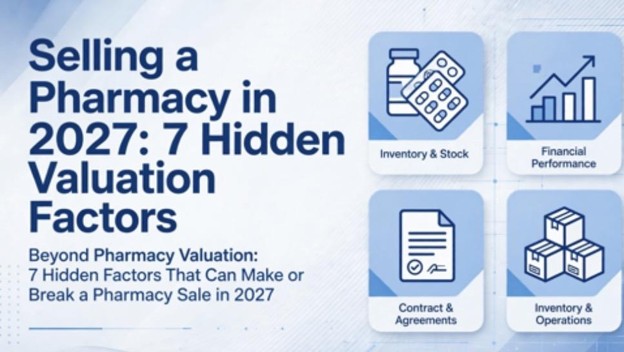
Selling a pharmacy in 2027 involves much more than setting a price and finding a buyer. Pharmacy owners must consider financial performance, prescription trends, licensing requirements, payer contracts, inventory, staffing, and potential risks that could affect a transaction.
Even a profitable pharmacy may face challenges if its records are incomplete or its operations depend heavily on the current owner. For buyers, understanding these details can prevent unexpected costs after acquisition. For sellers, identifying problems early can strengthen negotiations and improve buyer confidence.
Why Pharmacy Valuation Is About More Than Revenue
Revenue is an important starting point, but it does not show how much profit a pharmacy consistently generates or how much risk a buyer will assume.
Two pharmacies with similar annual sales may have different valuations because of operating expenses, prescription trends, reimbursement terms, contractual relationships, and regulatory history. Buyers want evidence that the business can maintain its earnings after ownership changes.
1. Prescription Quality and Refill Consistency
Prescription volume is an important indicator of pharmacy activity, but the consistency of that volume also matters.
A pharmacy with stable recurring prescriptions may offer more predictable performance than one that depends heavily on irregular demand.
Before a sale, owners should review:
- Monthly prescription volume and year-over-year trends.
- Recurring refill patterns and patient retention.
- Medication synchronization services.
- Dependence on a small number of prescribers.
- Changes that could affect future prescription volume.
Buyers should evaluate these trends alongside profitability rather than assuming that a high prescription count automatically means a higher valuation.
2. Pharmacy Benefit Manager Contracts and Reimbursement Risks
Pharmacy Benefit Manager (PBM) relationships can significantly affect financial performance. Prescription sales may look strong while reimbursement terms, fees, adjustments, and other contractual obligations reduce actual earnings.
Before purchasing a pharmacy, buyers should understand which payer relationships support its revenue and whether those arrangements can continue after the ownership change.
Sellers should organize relevant contracts, reimbursement records, audit correspondence, and outstanding payment adjustments.
Understanding these details helps buyers assess sustainable earnings instead of relying solely on gross sales figures.
3. State Licensing and Ownership-Change Requirements
Pharmacy licensing is one of the most important areas to review before buying or selling a pharmacy. Requirements vary by state, and an ownership change may require specific applications, disclosures, approvals, or notifications.
Buyers should not assume that the seller’s pharmacy permit or other registrations automatically transfer to the new owner.
Important areas to review include:
- State Board of Pharmacy permits and ownership disclosures.
- Applicable controlled-substance registrations.
- Medicare and Medicaid enrollment, where relevant.
- National Provider Identifier (NPI) and pharmacy identification records.
- PBM credentialing and commercial payer agreements.
- Inspection history and outstanding regulatory matters.
Confirm the applicable requirements with state authorities and qualified legal or regulatory advisors before setting a closing date.
4. Inventory Accuracy and Expiration Exposure
Pharmacy inventory can affect the final economics of a transaction. Expired, damaged, slow-moving, or otherwise unsaleable products may have little or no value to the buyer.
A pharmacy should conduct a detailed inventory review before the sale closes. The review should distinguish saleable products from items requiring special handling, removal, or disposal.
Important checks include:
- Inventory quantities and documented costs.
- Expiration dates and slow-moving products.
- Refrigerated and temperature-sensitive medications.
- Controlled-substance inventory records, where applicable.
- Reconciliation of physical inventory with pharmacy management records.
The purchase agreement should explain how inventory will be counted, valued, and paid for to prevent disagreements during closing.
5. Staffing Stability and Dependence on the Owner
A pharmacy may appear successful because its owner personally manages daily operations, maintains relationships, and handles administrative responsibilities.
However, buyers need to know whether the business can continue performing well after that owner leaves.
Review the pharmacist-in-charge arrangement, employee retention, staffing costs, written procedures, training records, and succession plans. Determine whether qualified personnel will remain available after the transaction.
A pharmacy with documented workflows and a capable team may be easier to transition than one that depends on undocumented knowledge held by a single person.
For sellers, preparing staff responsibilities and operating procedures before listing the business can demonstrate that the pharmacy is ready for a change in ownership.
6. Lease Terms and Location Security
A pharmacy’s location can influence its long-term commercial value. A strong patient base may become less valuable if the lease is close to expiration or the landlord does not approve the proposed ownership change.
Buyers should examine:
- Remaining lease term and renewal options.
- Rent increases and additional occupancy expenses.
- Assignment and change-of-control provisions.
- Landlord consent requirements.
- Applicable zoning and premises requirements.
- Accessibility, parking, and proximity to the patient community.
Lease issues should be addressed early because they can affect financing, negotiations, and the ability to continue operating after closing.
7. Financial Transparency and Unresolved Compliance Issues
Clean financial statements are valuable, but buyers also need supporting evidence. Differences between tax filings, accounting records, prescription reports, reimbursement data, and bank deposits can create uncertainty during due diligence.
Sellers should prepare consistent financial records and document legitimate one-time expenses or proposed earnings adjustments. Buyers should independently verify the information rather than relying entirely on the seller’s summaries.
Review the following areas:
- Profit and loss statements and tax returns.
- Accounts receivable, accounts payable, and outstanding liabilities.
- Payroll, employee obligations, and operating expenses.
- PBM audits, repayment demands, and pending disputes.
- Regulatory correspondence and inspection findings.
- Inventory records and material supplier agreements.
Unresolved issues do not automatically prevent a sale, but they should be disclosed and assessed appropriately. Professional advice can help determine how material findings affect valuation, transaction terms, and closing conditions.
How Sellers Can Prepare Their Pharmacy for a Better Sale
Preparing a pharmacy for sale should begin before it is publicly listed. Early preparation gives owners time to correct documentation gaps, understand their financial position, and identify issues that could affect buyer confidence.
Build a Buyer-Ready Document Package
Organize financial statements, tax records, licensing documents, leases, employment agreements, supplier contracts, payer information, and inventory reports.
Protect sensitive patient information and share it only through appropriate, legally compliant processes.
Obtain a Defensible Pharmacy Valuation
A professional valuation should consider normalized earnings, comparable transactions where relevant, inventory treatment, business assets, contractual risks, and future operating prospects.
Avoid relying on a generic industry multiple as a guaranteed selling price. Actual value depends on the specific business, its financial performance, and the terms a qualified buyer is willing to accept.
Address Transfer and Transition Risks Early
Identify permits, registrations, contracts, and third-party relationships that require new applications, consent, or other actions.
Develop a transition plan for employees, vendors, patient communications, and daily operations to reduce disruption after closing.
Protect Confidentiality During Negotiations
Use appropriate confidentiality agreements and carefully control access to sensitive financial and commercial information.
Verify a prospective buyer’s qualifications and financial capacity before sharing extensive records. Patient information must be handled in accordance with applicable privacy laws.
What Buyers Should Check Before Making an Offer
A buyer should evaluate the pharmacy as both a financial investment and a regulated healthcare operation.
Look Beyond the Asking Price
Calculate the total cost of acquiring and operating the pharmacy. Consider the purchase price, inventory, professional fees, financing expenses, working capital, technology, staffing, and potential transition costs.
Verify the Seller’s Claims
Review source documents, examine prescription and reimbursement trends, and investigate material legal or regulatory concerns.
Seek independent accounting, legal, and pharmacy compliance advice where appropriate.
Define the Deal Structure Clearly
Determine whether the transaction involves selected business assets or ownership interests in an entity. Each structure can have different tax, liability, consent, and regulatory consequences.
The purchase agreement should address inventory, liabilities, employee arrangements, required approvals, closing conditions, and responsibilities after closing.
The appropriate structure depends on the transaction and professional advice.
Common Mistakes That Can Reduce Pharmacy Sale Value
Even a pharmacy with a loyal patient base can face avoidable problems during a sale.
- Overpricing the business: Setting a price based on expectations rather than documented earnings and market evidence.
- Ignoring contract restrictions: Assuming payer agreements, leases, or registrations will continue automatically.
- Delaying document preparation: Waiting until a buyer requests records to resolve inconsistencies.
- Overlooking inventory issues: Failing to identify expired or unsaleable products before closing.
- Underestimating transition costs: Ignoring staffing, technology, licensing, and working-capital requirements.
- Sharing sensitive information too early: Disclosing confidential business or patient information without appropriate safeguards.
Addressing these issues early can make negotiations more organized and reduce the risk of unexpected delays.
Frequently Asked Questions About Pharmacy Valuation and Sales
What Factors Determine the Value of a Pharmacy in 2027?
Pharmacy value depends on sustainable earnings, prescription trends, reimbursement terms, payer relationships, inventory, staffing, location, licensing status, and potential liabilities. No single factor determines the final sale price.
How Can I Increase My Pharmacy’s Selling Price?
Improve financial documentation, resolve outstanding compliance issues, maintain accurate inventory records, strengthen operational procedures, and obtain a professional valuation. Better preparation can support buyer confidence, although a higher sale price is not guaranteed.
Do Pharmacy Licenses Transfer Automatically When Ownership Changes?
Not necessarily. Requirements vary by state and registration type. Buyers should confirm applicable ownership-change, licensing, and enrollment requirements with the relevant authorities before closing.
Should I Sell My Entire Pharmacy or Only the Prescription Files?
The right option depends on your goals, the buyer’s interest, the pharmacy’s assets and liabilities, and applicable regulatory and contractual requirements. Compare the net proceeds and remaining obligations under each structure before deciding.
How Long Does It Take to Sell a Pharmacy in the USA?
The timeline varies according to buyer financing, due diligence, licensing requirements, contract approvals, negotiations, and transaction complexity. Preparing documents and identifying regulatory requirements early can help reduce avoidable delays.
Conclusion
Selling a pharmacy in 2027 requires careful preparation, realistic valuation, and a clear understanding of the risks that can affect a transaction. Prescription consistency, PBM contracts, licensing requirements, inventory, staffing, lease terms, and financial transparency all influence how buyers assess a pharmacy.
For sellers, addressing these factors before listing the business can strengthen negotiations and support a smoother transition. For buyers, thorough due diligence helps identify potential liabilities and evaluate whether the acquisition fits their financial and operational goals.
RxAdvisorInc can help pharmacy owners explore pharmacy consulting, transaction preparation, and regulatory considerations as they plan their next steps. Consult qualified legal, tax, and licensing professionals for advice specific to your transaction.
Blog Disclaimer
The information provided on this website and within our blog posts is for general informational purposes only. While we strive to keep the content accurate and up to date, information may be incomplete, outdated, or inaccurate, and should not be relied upon as a substitute for professional advice.
Rx Advisors Inc. does not provide legal, accounting, tax, or regulatory advice. Nothing on this website should be construed as legal advice, nor does it create a client–advisor, attorney–client, or any other professional relationship. Laws, regulations, and industry requirements vary by jurisdiction and are subject to change. Readers are encouraged to consult with qualified legal counsel, accountants, or other appropriate professionals regarding their specific circumstances before making any decisions.
By using this website, you acknowledge and agree that Rx Advisors Inc. is not responsible for any errors or omissions, or for any actions taken based on the information provided.
Leave a Reply